
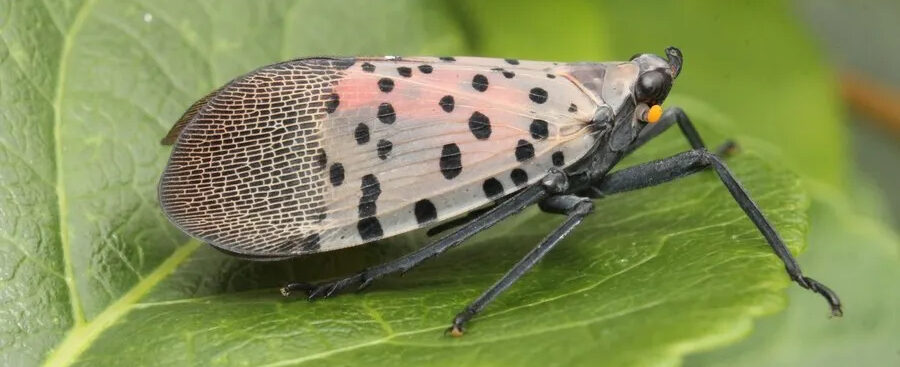
The spotted lanternfly has been hopping its way into Fairfield County conversations for a few seasons now, and let’s be honest: if you’ve spotted one (or a dozen) lately, it’s hard not to notice how downright striking these invaders are. Those adults, with their delicate, moth-like wings patterned in soft beige dotted with bold black spots, flash open to reveal vivid red, black, and white underwings—like tiny tropical butterflies that somehow wandered into Connecticut. Even the nymphs steal the show: early stages are jet-black with white spots, while later ones sport bright red bodies accented in black and white, almost jewel-like as they scramble up tree trunks or your siding.
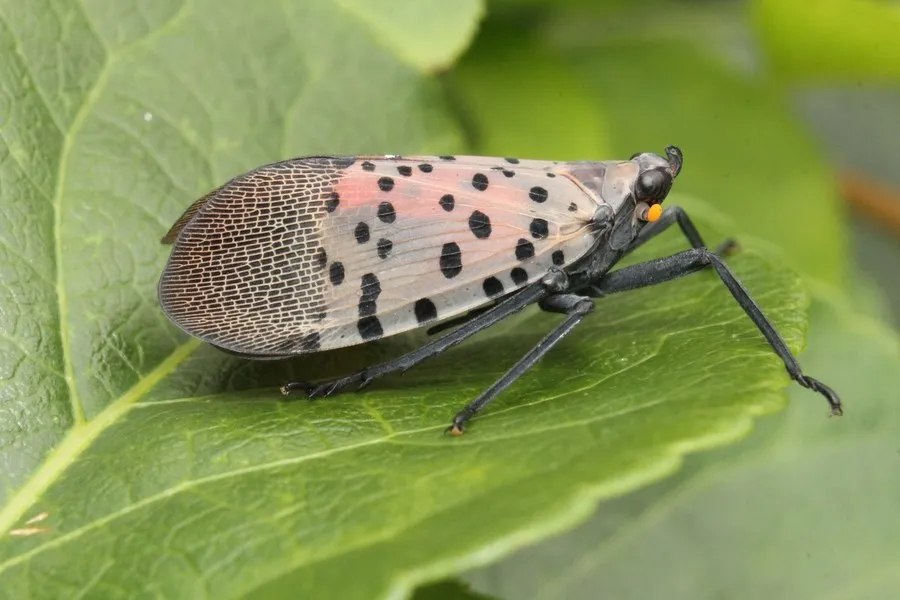
And here’s a quick fact to drop at your next backyard gathering: they’re not flies at all. Despite the name, spotted lanternflies (Lycorma delicatula) are actually planthoppers—close cousins to leafhoppers and treehoppers in the order Hemiptera. No wings that buzz like a housefly; instead, they hop and glide with those showy wings, more acrobatic than airborne menace.
But beauty aside, I get it—the sticky honeydew, the swarms, the egg masses that look like someone smeared mud on your fence—it can feel overwhelming as we sit here in early February 2026, with spring (and the next wave of nymphs) on the horizon. The good news? There’s still no reason to panic. Fairfield County has been ground zero since those first established populations popped up in Greenwich and nearby areas back in 2020. Numbers surged in 2025, with sightings now reported across every county—though Windham has lagged in some accounts, often as the last holdout without major sustained populations. The Connecticut Agricultural Experiment Station (CAES) team, including Dr. Gale Ridge, has closely tracked the spread, particularly along I-95 corridors, where adults became especially visible and abundant last summer and fall.
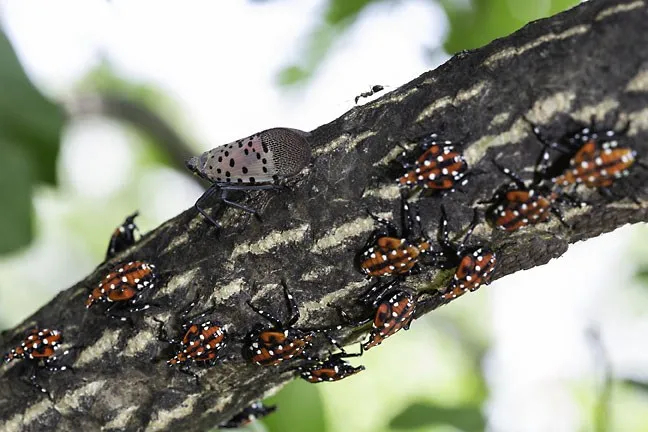
Yet the experts keep circling back to the same reassuring story: this is the classic invasive boom phase, and the bust is coming. Pennsylvania’s been through it since 2014—wild explosions followed by natural drops as birds, spiders, praying mantises, parasitic wasps, and fungal pathogens discover the new food source. Dr. Ridge and team have said Connecticut’s pattern looks headed the same way: give it a few more seasons (maybe 3–5 years), and those native predators could take over the heavy lifting. In older infestation zones elsewhere, populations have trended down without massive interventions.
For most of us in residential Fairfield County? These flashy hoppers aren’t tree-killers on the scale of emerald ash borer or woolly adelgid. They won’t wipe out your maples, oaks, or beloved evergreens outright. Feeding weakens plants a bit (especially if already stressed by drought or other issues), and the honeydew-sooty mold combo is mostly a cosmetic and cleanup headache—annoying on patios, cars, and outdoor furniture, but not doomsday for the average yard. The big agricultural hits are grapes, hops, apples, and that weedy tree-of-heaven they adore, not your typical home landscape.
So while the quarantine rolls on (renewed through at least late 2025, check CAES for the current status), the smartest play isn’t full-scale war—it’s calm, consistent action that helps tip the scales while nature catches up:
- Squish on sight — Adults and nymphs are squishy; one good stomp or smack does the trick.
- Scrape those egg masses — If you spot any lingering gray blobs on smooth surfaces (trees, bricks, vehicles), scrape them off into soapy water or alcohol before they hatch in spring.
- Hit tree-of-heaven — Pull young ones or treat stumps; removing their favorite host starves the population faster than anything.
- Report with photos — Use the CAES form to help track trends—your sighting matters without turning you into a full-time bug hunter.
Bottom line: These gorgeous (yes, I’ll say it) invaders are flashy nuisances right now, not garden destroyers forever. We’re riding the peak wave, but the experts bet on decline ahead, just like our neighbors to the south. Enjoy the irony of their beauty if you can, keep the easy controls going, and don’t lose sleep over it. Spring will bring more of them, but also more predators ready to crash the party.
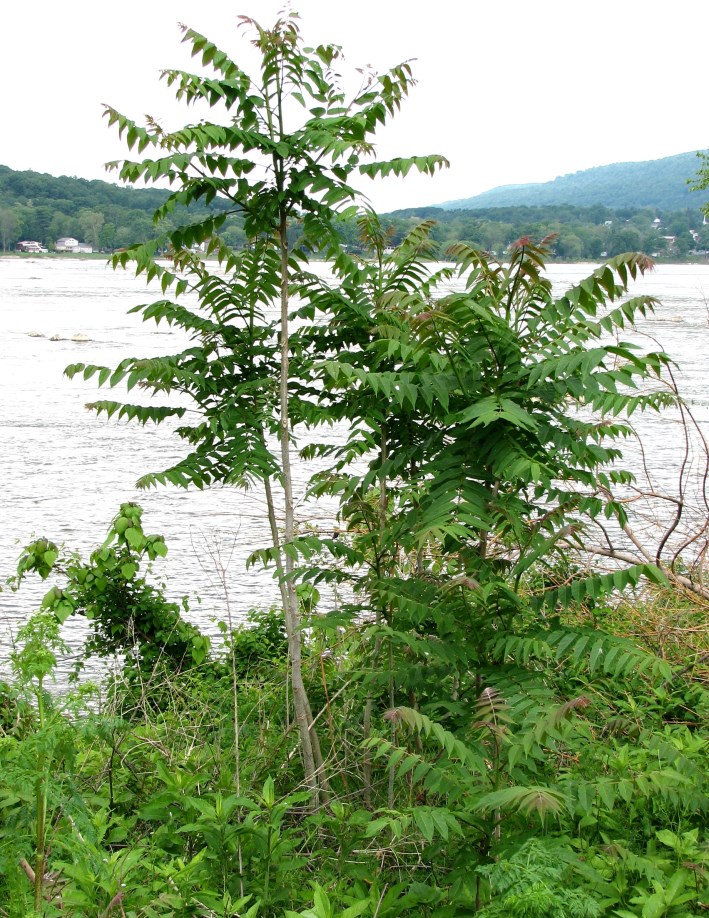
If you’re unsure about identifying tree-of-heaven, nymphs vs. something else, or just want a second pair of eyes on your yard, call me at Redding Nursery or email a picture to sean@reddingnursery.com—we’re watching this one closely too, and we’re staying chill about it.
(For the freshest maps, quarantine details, reporting, and ID guides: Check the CAES Spotted Lanternfly page or DEEP Forestry resources.)
 Share on Facebook
 Tweet this post
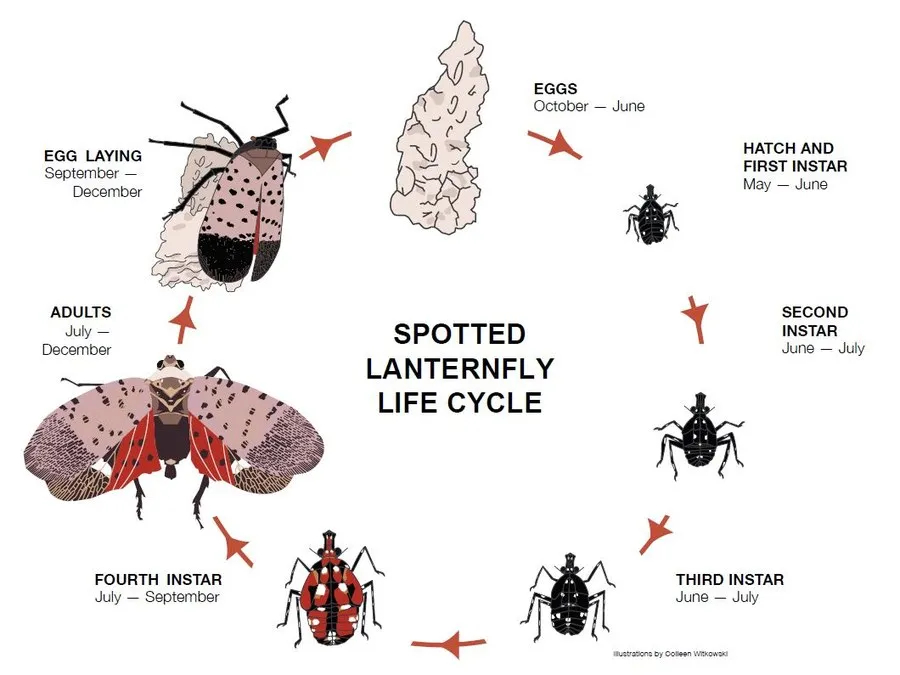 The spotted lanternfly generates one generation per year. Adults die in the winter, and the eggs overwinter and hatch in the spring. source: Penn State Extension
Recent Comments